

 By
By Introduction
Blood sugar teas aren’t a cure for anything but they can help improve your overall well-being if you consume them consistently as part of a larger, healthier lifestyle. The majority of people who consume blood sugar teas continue to drink them because they are easy to prepare, made available from many different sources, and replace the sugary drinks that are contrary to your glucose goals.
The true benefit of drinking blood sugar teas comes down to whether or not you are consuming teas that have scientific evidence supporting their use rather than ones that are just being marketed and promoted.
While all teas have different compounds within them, blood sugar teas specifically contain varying levels of polyphenols. For instance, green and black teas are plain teas that contain different types of polyphenols, whereas herbal teas contain various other plant extracts.
Although there have been some studies showing a positive correlation between blood sugar levels and tea consumption, many other studies have produced conflicting results; therefore you will want to evaluate each tea individually based on the best scientific evidence available.
11 Best Blood Sugar Teas to Support Healthy Glucose Levels
1) Green tea
Green Tea is a very popular option for those looking for blood sugar support. Green tea supplementation significantly lowers the level of fasting glucose as indicated in a meta-analysis, however, it did not demonstrate any statistically significant effect on fasting insulin or the hemoglobin A1C after aggregation of trial results.
In addition, a different meta-analysis found no statistically significant effects on fasting glucose, fasting insulin, hemoglobin A1C or HOMA-IR. That said, the evidence gathered to support the use of green tea is promising but far from consistent.
In light of this information, green tea is still a great first option for daily consumption due to its availability, affordability and lack of added sugars. Green tea is likely among the most reasonable considerations for blood sugar tea if you wish to incorporate the beverage into your daily routine rather than as an “emergency fix”.
2) Black tea
Black tea also merits consideration for its beneficial effects on post-meal blood sugar levels based on human studies. In a double-blind, crossover clinical trial of normal and pre-diabetic adults, subjects who consumed black tea after a sugar-based meal had a significantly lower average peak blood glucose levels (i.e., their incremental response to sucrose) than those who did not.
Given the strengthening effect of black tea as a nutritional supplement for the purpose of controlling blood glucose levels during the time period after eating, black tea merits special consideration as a suitable tea for consideration as an aid in blood glucose management. If you enjoy a bold, full bodied flavour, black tea is a very strong option provided you consume it either unsweetened or only lightly sweetened.
3) Oolong tea
Oolong is a moderately popular type of tea (between green and black) that has been researched and might be helpful with blood sugar control. There has been one crossover study in patients with type 2 diabetes reporting that drinking 1,500 ml/day of oolong tea for 30 days lowered their plasma glucose and fructosamine.
However, another controlled study of healthy individuals did not find improvements in glucose metabolism, so there may be variability in the benefits of oolong based upon study design and type of individuals in the trials.
What this means is that oolong tea is promising for many people, but the use of oolong tea will not guarantee blood sugar improvements for everyone who drinks it. I would also encourage you to consider using oolong tea as part of your daily routine if you are looking for a change in taste and style from your current green and black teas.
4) Pu-erh tea
Although pu-erh tea is not a very common tea (in the western hemisphere), there has been research conducted to support its potential health benefits. Mechanistic studies suggest that polysaccharides from pu-erh tea may help to inhibit enzymes involved in the digestion of carbohydrates, and animal studies have demonstrated that pu-erh tea may lower glucose levels and provide improved postprandial glucose control.
Furthermore, it has also been shown that ripened pu-erh produced a greater reduction in blood glucose levels than un-ripened pu-erh, when evaluated in diabetic animal models.
Although there is scientific support for pu-erh tea and its potential to support blood glucose control, there are fewer studies with humans than are available for green and black tea. Based upon the scientific evidence on pu-erh, I would call it a solid “worth trying” type of tea, but not a “miracle” type tea.
5) White Tea
Due to its gentle flavour, white tea has been largely forgotten when it comes to blood sugar discussions. New research shows that it might help to increase insulin sensitivity and enhance glucose tolerance; however, most of the initial studies have been done on animals rather than on humans, and are thus not as compelling.
White tea can contribute to a blood sugar-friendly lifestyle by providing you with a lighter, gentler drink. There is less evidence available to confirm the effectiveness of white tea for glucose regulation compared to some other teas (such as ginger or green); therefore, you should keep your expectations in check. White tea is closer to a potential wellness tea rather than an effective glucose-regulating beverage.
6) Chamomile tea
Chamomile is one of the better supported herbal teas in terms of aiding with glucose control. A randomized controlled trial in adults with type 2 diabetes showed that chamomile tea was able to reduce HbA1c, reduce insulin levels, reduce HOMA-IR, and also reduce various lipid markers. A meta-analysis conducted later suggested that chamomile can help decrease both blood glucose and HbA1c; however, further research is needed to better support this conclusion.
Chamomile makes for an excellent option for the evening hours if you have trouble controlling your blood sugar due to stress, lack of sleep or late-night snacking; it is one of the most calming and easy to integrate into a consistent routine.
7) Hibiscus tea
There is a growing amount of research exploring the positive effects of hibiscus tea. A systematic review of studies as well as a meta-analysis found that hibiscus tea can lower fasting blood glucose levels by 3.67 mg/dL on average; as well as help lower blood pressure substantially.
Hibiscus as a single strategy is likely not isolated to diabetes since its properties would definitely contribute positively to your body as you drink it; however, it is one of the best herbal teas that have been studied and demonstrated to positively impact blood sugar levels in people suffering from diabetes.
Additionally, hibiscus tea has a very tangy, light and refreshing flavor, making it a perfect choice for iced tea during warmer weather.
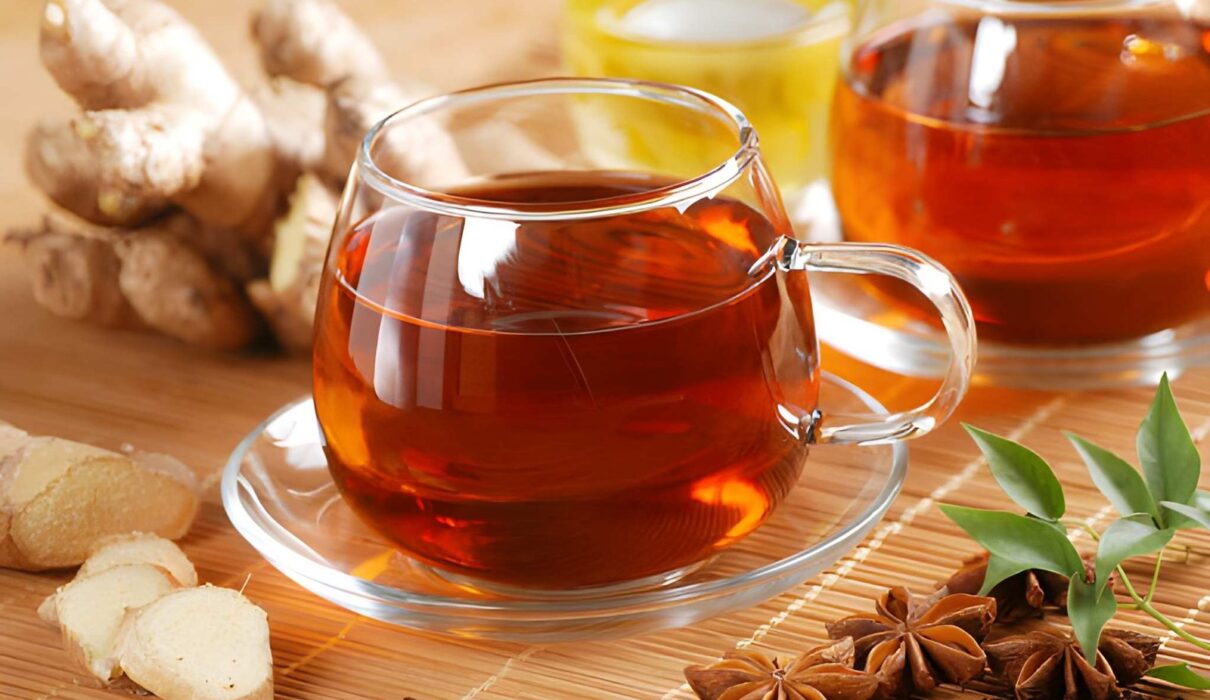
8) Ginger tea
Ginger tea is well known for its ability to assist with digestion, but evidence is also emerging to support ginger’s impact on blood sugar levels.
There is a systematic review and meta-analysis that concluded ginger may help lower HbA1c in individuals who have type 2 diabetes; however, a newer meta-analysis found ginger to have no appreciable effect on fasting blood sugar levels or HbA1c. The research here is encouraging but not conclusive.
In spite of the mixed findings, ginger tea would still be a good choice for someone looking for a warming, caffeine-free beverage to enjoy after meals and among the better supportive options for someone who has diabetes; just don’t represents its benefits too much.
9) Fenugreek tea
The fenugreek herb is well established as an important herb when discussing blood sugar control. A meta-analysis of multiple studies showed a statistically significant reduction in total HbA1c levels. However, there is conflicting evidence as to the effects of fenugreek on fasting blood glucose and post-prandial blood glucose levels.
In addition, many studies suggested that fenugreek has an anti-diabetic effect, although study quality and heterogeneity were limitations in each study.
Fenugreek tea is interesting to explore for anyone wishing to add an herbal tea that has a history of supporting blood sugar. Fenugreek tea has a very distinct taste and may take some time to get used to, but the evidence is hard to ignore.
10) Rooibos tea
Rooibos tea is an excellent evening beverage and can appeal to readers looking for a beverage that has a natural sweetness, without sugar. Rooibos is caffeine free, smooth, and has some evidence to support the consumption of rooibos to help with blood sugar control.
A systematic review of human studies examining the effects of rooibos on blood sugar in healthy, at-risk, and chronically ill participants found that rooibos would lower blood glucose, improve the lipid profile, and proof and improve anti-oxidative activity, however the evidence base is still quite limited and sample sizes are small.
Because rooibos tea is not as well-known as green tea, it should have a legitimate place in anyone’s blood sugar management/lifestyle.
11) Moringa tea
Moringa tea is one of the most unique herbal teas for blood sugar support and a look at the scientific evidence demonstrates it may have more potential than most people think. A review of 30 published studies has concluded that 5 out of the 7 human studies demonstrated a statistically significant decrease in blood glucose levels from diabetic patients consuming moringa.
This does not guarantee that moringa will work for everyone, however, it is enough evidence to support moringa as a strong option for individuals interested in using tea to help maintain blood sugar balance. For those readers who prefer plant-based, holistic approaches to their health; moringa is an excellent option due to its simplicity and earthy nature.
Conclusion
Your best tea for blood sugar is the tea you will drink consistently; however, there are a number of teas that stand out as being ideal candidates from both research and every day practicality. Green tea, black tea, chamomile tea, hibiscus tea, fenugreek tea, and rooibos tea all demonstrate the best combination of research and usability from an every day perspective.
Oolong tea, pu-ehr tea, white tea, ginger tea, and moringa tea add variety to the same list, but do not demonstrate the same degree of usability or research findings to differentiate themselves as being superior to most of the items in the first list. Cinnamon is a popular option but at this time, there is not enough scientific evidence to rank it as one of the best.
The key takeaway is simple: find a simple and plain unsweetened tea that you enjoy, consume it with meals or during your evening relaxation time; use it as an additional support to your overall blood sugar plan. Our small habits add up over time and including tea into our daily practices will be one of the simplest ways of creating long-term change.