

 By
By Introduction
Having an upset stomach can make things seem much more complicated than they really are. One way to combat this discomfort is through smoothies that promote gut health. They’re easy to make with ingredients you probably already have on hand, and they offer a lot of flexibility since you can customize what you use.
You’ll notice that many of the “best” gut health smoothies do not contain highly-labeled superfoods or powdered proteins. Instead, they consist mainly of a combination of fiber, fluid, and gut-supportive ingredients like fruits & vegetables, oats, nuts & seeds, dairy products like yogurt & kefir, and others.
All of which provide needed fiber (soluble & insoluble) that helps reduce constipation, fluid that helps fiber do its job better, and yogurt and fermented dairy products like kefir provide needed probiotics to support healthy gut flora; and many experts agree that increasing fiber intake should be done gradually particularly for those who experience wind or bloating.
If your digestion often feels off and your skin isn’t reflecting your efforts, it might be worth understanding how gut balance affects your overall wellness.
What Makes a Smoothie Gut-Friendly?
To digest a smoothie properly, typically, three things need to be present: fiber, liquid (hydration), and other substances that don’t upset your stomach. Fiber helps to keep things moving through your digestive tract while the liquid helps hydrate the fiber allowing it to perform its natural function. This is one reason why the nutrition information provided by NIDDK recommends consuming enough fiber and drinking adequate amounts of liquid for proper relief from constipation.
Commonly used, high-fiber ingredients for smoothies that promote gut health are berries, bananas, oats, chia seeds, flaxseed, green leafy vegetables, and pears. Additionally, yogurt (especially Greek-style) and kefir may be helpful because they provide probiotics (essentially live bacteria) and protein. According to Johns Hopkins, Greek-style yogurt can increase the amount of probiotics and proteins contained in a single serving of a smoothie, whereas NCCIH claims that the probiotics in yogurt and fermented foods are live microorganisms.
If you have food sensitivities or allergies, we recommend that you stick to the most basic base ingredients possible to ensure that you do not overload yourself with too many unfamiliar ingredients at one time. For instance, people suffering from IBS-like symptoms, typically benefit from adding fiber slowly and keeping track of their symptoms and triggers as opposed to attempting to consume large quantities of fiber all at once.
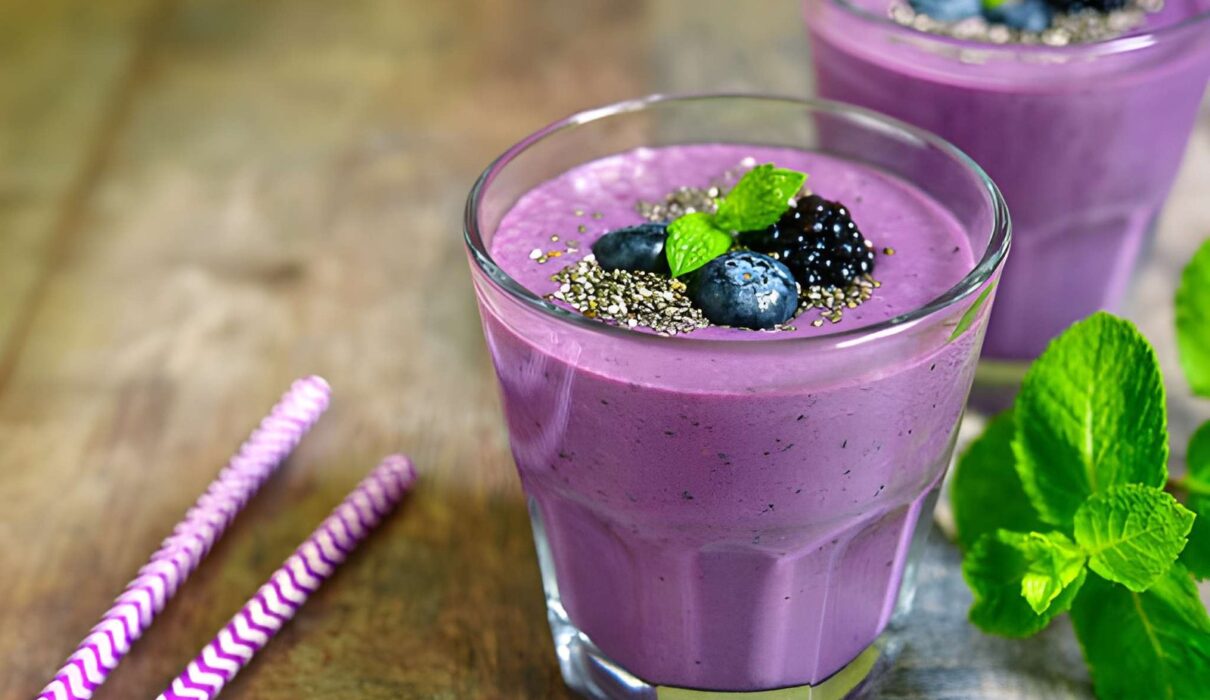
1. Blueberry Kefir Calm-Down Smoothie
Ingredients:
- 1 cup plain kefir
- 1 cup frozen blueberries
- 1 small banana
- 1 tbsp chia seeds
Prep:
- Peel banana
- Measure kefir and blueberries
- Soak chia seeds (optional, 5–10 min for better digestion)
Making Process:
- Add kefir to blender
- Add blueberries and banana
- Add chia seeds
- Blend until smooth
- Adjust thickness with water if needed
2. Banana Oat Digestion Smoothie
Ingredients:
- 1 ripe banana
- ½ cup rolled oats
- 1 cup almond milk (or any milk)
- 1 tbsp ground flaxseed
- Pinch of cinnamon
Prep:
- Soak oats for 5–10 minutes (optional for smoother texture)
- Peel banana
Making Process:
- Add milk to blender
- Add oats and banana
- Add flaxseed and cinnamon
- Blend until creamy and smooth
3. Pineapple Ginger Belly-Friendly Smoothie
Ingredients:
- 1 cup pineapple chunks
- ½ banana
- ¾ cup Greek yogurt
- ½ tsp grated ginger
- ½ cup water or coconut water
Prep:
- Peel and grate fresh ginger
- Chop pineapple (if fresh)
Making Process:
- Add yogurt and water first
- Add pineapple and banana
- Add grated ginger
- Blend until smooth and creamy
4. Spinach Pear Fiber Boost Smoothie
Ingredients:
- 1 ripe pear
- 1 handful spinach
- 1 cup oat milk
- 1 tbsp chia seeds
- ½ banana
Prep:
- Wash spinach thoroughly
- Core and chop pear
Making Process:
- Add milk to blender
- Add spinach and pear
- Add banana and chia seeds
- Blend until fully smooth (no leafy bits)
5. Strawberry Flax Probiotic Smoothie
Ingredients:
- 1 cup strawberries
- ¾ cup Greek yogurt
- 1 tbsp ground flaxseed
- ½ banana
- ½ cup milk or water
Prep:
- Wash strawberries
- Remove stems
Making Process:
- Add yogurt and liquid
- Add strawberries and banana
- Add flaxseed
- Blend until creamy and smooth
6. Mango Turmeric Tummy Soother
Ingredients:
- 1 cup frozen mango
- 1 cup kefir or yogurt
- ½ tsp turmeric
- ¼ tsp ginger powder (or fresh)
- ½ banana
Prep:
- Measure spices carefully
- Slice banana
Making Process:
- Add kefir/yogurt to blender
- Add mango and banana
- Add turmeric and ginger
- Blend until thick and smooth
7. Apple Cinnamon Oat Smoothie
Ingredients:
- 1 apple (chopped)
- ½ cup rolled oats
- 1 cup milk
- 1 tbsp almond butter
- Pinch cinnamon
Prep:
- Core and chop apple
- Soak oats for better digestion
Making Process:
- Add milk first
- Add apple and oats
- Add almond butter and cinnamon
- Blend until smooth
8. Kiwi Cucumber Hydration Smoothie
Ingredients:
- 2 kiwis (peeled)
- ½ cucumber
- 1 small banana
- 1 cup cold water
- 1 tbsp chia seeds
Prep:
- Peel kiwi
- Slice cucumber
Making Process:
- Add water to blender
- Add kiwi and cucumber
- Add banana and chia seeds
- Blend until light and refreshing
9. Avocado Berry Gut Balance Smoothie
Ingredients:
- ½ avocado
- 1 cup mixed berries
- ¾ cup yogurt or kefir
- 1 tbsp flaxseed
- ½ cup milk
Prep:
- Scoop avocado flesh
- Measure berries
Making Process:
- Add yogurt and milk
- Add berries and avocado
- Add flaxseed
- Blend until thick and creamy
Tips for Improving Your Digestive System
Perhaps the most popular way to improve digestion through nutrition is to drink smoothies. Unfortunately, one of the biggest mistakes that people make with smoothies is turning them into sugar bombs by using too much juice, sweetened yogurt, or too much fruit, which means the smoothies would have less of a benefit to the digestive system. The key is to strike a balance between fibre, protein and fluid. Even small quantities of nut butter, yogurt, chia seed or flaxseed can change a smoothie from being predominantly sugar to being a healthy option. Johns Hopkins also suggests using yogurts that have the least amount of added sugar.
Additionally, it is wise to increase fibre in your diet gradually. According to NIDDK, there are many uncomfortable side effects to adding fibre to your diet too quickly. All forms of fibre perform better when combined with an adequate amount of fluid, this becomes increasingly important when you experience challenges associated with bloating, constipation, or symptoms that are consistent with IBS.
Below are some simple rules that will help you significantly improve your digestion when you use smoothies as your source of nutrition:
- Beginning with one or two fibre-rich ingredients as opposed to five will assist with digestion.
- A plain yogurt or kefir will provide you with the greatest number of probiotic benefits.
- If you like to keep your smoothies cold, it is acceptable to add ice, but do not add an excessive amount of ice if you find that consuming very cold liquids bothers you.
- Be aware of which foods may cause a negative reaction if you experience IBS or reflux.
- Consume the smoothie slowly, as opposed to gulping it down.
Both NHS and NCCIH acknowledge that certain forms of probiotics may help with certain digestive issues for a percentage of people; however, not all types or strains of probiotic foods perform the same. Thus, it is important to be consistent and to determine which foods provide you with the most benefit rather than attempting to follow the latest trends.